

Long before empires, before kings, before borders existed on maps—and before landlords and tyrants internal and external learned to tax the land and decide which harvests were permitted and which were not—the wondrous flowers of the Madhuca longifolia tree belonged to the forest and to the people who lived in it.
For the indigenous Adivasi communities across the central and eastern forests of the Indian subcontinent (the Gond, Santhal, Baiga, Ho, Munda, and Oraon peoples) this tree was never treated as a simple raw material. It marked time. It fed people. And it stood quietly in the background of daily life. When its night-blooming flowers fell to the forest floor, pale and fragrant at dawn, it showed that the season was changing. Food became hereafter easier to find. The year moved forward.
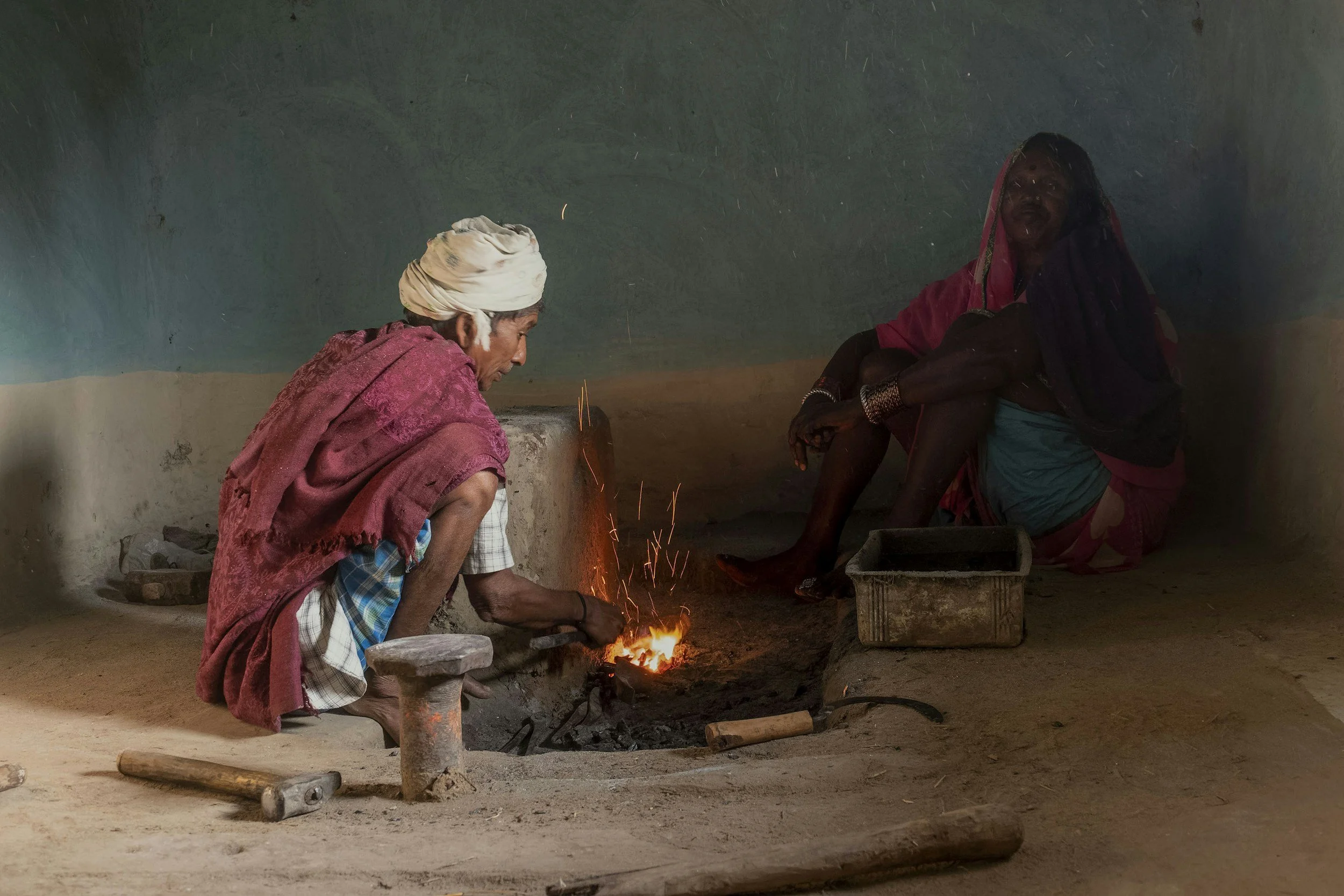
Mahua flowers were gathered up from the ground at dawn and throughout the day dried under the sun. These flowers sustained families through difficult months and sweetened everyday meals. When fermented and distilled these flowers become a liquor unlike any other; smooth, floral, and grounding. This was not drinking as a kind of furtive escape from the pressures of daily life, but part of local culture and its rituals. Mahua warmed people during cold nights and was consumed during weddings, to honour the dead, and to mark festivals tied to the seasons of planting, of harvest, and of rain.
For many communities, mahua liquor was (and remains) sacred. It was poured onto the earth before being consumed as a libation to the forest and to the ancestors who had once lived there. It was shared, not hoarded. Drinking alone was discouraged. Mahua was meant to bring people together. Elders discussed matters big and small over it. Arguments were settled in its company. Stories and songs survived because of it.
Colonial rule disrupted this relationship. British administrators, unwilling to understand indigenous systems, classified mahua as a dangerous and illicit substance. For it did not fit neatly into the systems of taxation or control they brought with them from England. Forests by their density and hostility restricted access to administrators, soldiers and officials from outside. Distillation in these places became, therefore, something considered criminal. A practice that had sustained communities for generations was therefore reframed as a social problem to be fixed.
But mahua liquor did not disappear. Its production continued… but more quietly, in hidden stills, in forest clearings, in knowledge passed carefully from one person to another in hushed conversations away from prying eyes. Prohibition did not weaken its significance to many communities. In fact, in the small but daily rebellion against imperial power, it strengthened this significance. Mahua became part and parcel of resistance and memory of freer times.
To drink the spirit was to remember a way of life that existed before unthinking ‘permission’ from afar was required.
As mahua becomes visible again, both in India and now the United Kingdom, it returns with this history intact. This is not rediscovery, but continuation. Each distillation begins with those same fallen flowers, which are gathered by our partners working alongside tribal families in India and distilled here in the UK.
What ends up in your glass carries the memory of forests that sustained entire cultures and of people who refused to let their traditions disappear.